
For years, food discovery has largely been driven by search engines, social media and word of mouth.
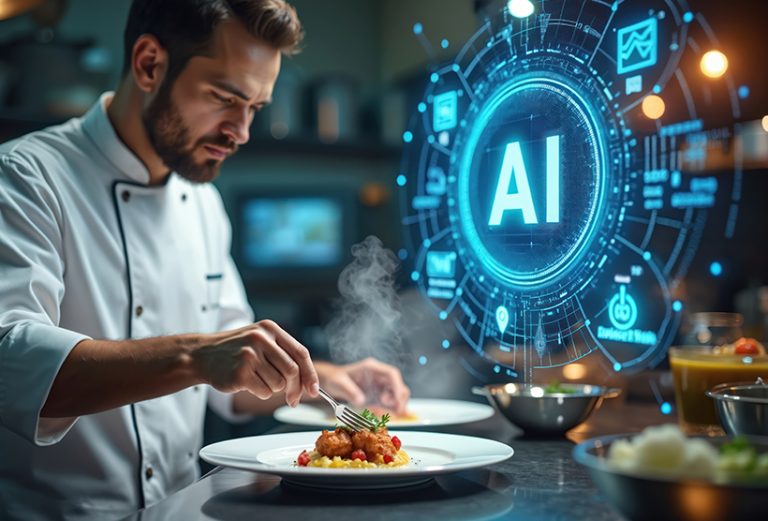
Increasingly, another layer is beginning to influence how customers decide what to eat, where to order from and which products to buy: AI powered search and recommendation tools.
While the long term impact is still developing, the shift already raises important questions for operators, retailers and food brands.
Because in the future, customers may not simply search for restaurants or products.
They may ask AI directly.
Questions like:
- “What are the best brunch dishes near me?”
- “What desserts are trending right now?”
- “What should I add to a summer menu?”
- “Which ingredients work well for loaded fries?”
- “What products are popular in cafés?”
That changes the way food businesses may need to think about visibility and discovery online.
Search Is Becoming More Conversational
Traditional search behaviour relied heavily on keywords.
AI driven search tools are changing that by encouraging conversational questions and summarised recommendations.
Instead of scrolling through pages of search results, users increasingly expect quick, direct answers.
For foodservice businesses, that could eventually influence:
- menu wording
- website structure
- product descriptions
- blog content
- online discoverability
Clear language and practical information may become increasingly important.
Familiarity May Become More Powerful
One interesting possibility is that AI driven discovery could favour recognisable, clearly described dishes over overly abstract menu language.
A dish described as:
“Hot Honey Halloumi Fries”
may simply be easier for recommendation systems to understand and surface than a vague or highly conceptual menu title.
That does not mean creativity disappears.
But clarity may become commercially valuable in new ways.
Visual Food Will Still Matter
AI may influence discovery, but visual appeal will remain central to foodservice marketing.
Customers still make highly emotional decisions around food.
Presentation, indulgence, texture and social media appeal are likely to remain important factors in what gets shared, remembered and ordered.
In fact, visually distinctive foods may become even more commercially important if digital recommendation systems increasingly prioritise engagement and popularity signals.
Expertise May Matter More, Not Less
As AI generated content becomes more common online, genuinely useful expertise may become more valuable.
Operators are unlikely to trust generic information alone when making decisions around:
- menus
- suppliers
- ingredients
- pricing
- service realities
Businesses that combine practical experience with useful insight may become easier to trust and easier to discover.
A Shift Worth Watching
AI is unlikely to replace the human side of foodservice.
But it may quietly reshape how customers discover food, how operators research ideas and how products gain visibility online.
For food businesses, the opportunity may not simply be adopting AI tools.
It may be understanding how customer behaviour itself is starting to change.