
As the days get shorter and the temperatures drop, something changes about the food we want to eat.
Light summer salads give way to warming dishes. Grills make room for ovens. We start craving food that’s richer, heartier and altogether more comforting.
And few ingredients capture that seasonal shift quite like cheese.
From bubbling gratins and golden toasties to baked Camembert and cheese-laden pasta, autumn is when cheese really comes into its own.
But what is it about cheese that makes it such a natural fit for the colder months?
The return of comfort food
Autumn brings a noticeable change in appetite. As the weather cools, warming, satisfying dishes start to feel particularly appealing.
And cheese has long been central to some of our most familiar comfort foods.
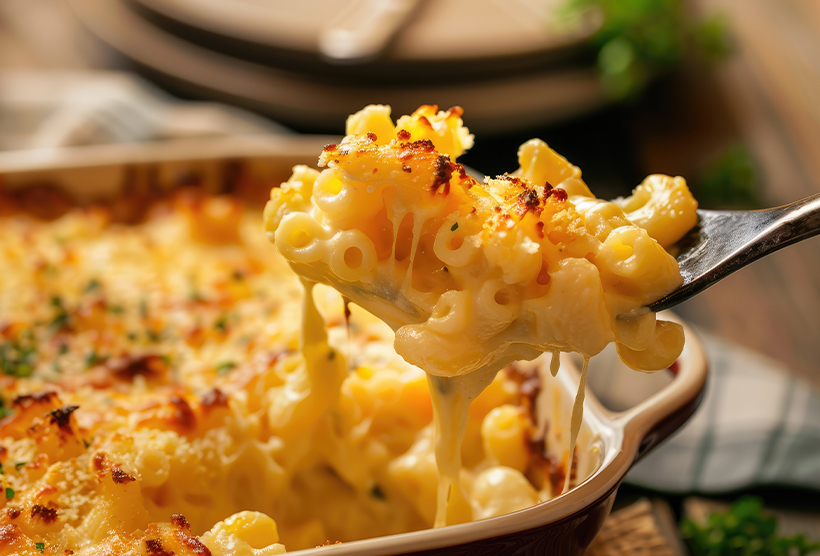
Think macaroni cheese, cauliflower cheese, lasagne, cheese and potato pie or a perfectly toasted cheese sandwich. These aren’t necessarily new or fashionable dishes, but that’s precisely part of their appeal.
They offer familiarity, warmth and a sense of indulgence.
In a food culture that increasingly celebrates nostalgia and familiar favourites, cheese sits comfortably at the heart of both.
For operators, autumn provides an opportunity to revisit these classics and give them renewed attention, whether through different cheese combinations, seasonal ingredients or more contemporary presentation.
It’s all about the melt
There’s something particularly appealing about melted cheese.
The golden crust on a gratin. Mozzarella stretching from a freshly baked pizza. A bubbling cheese sauce. The first cut into a warm, baked Camembert.
These are sensory experiences as much as they are flavours.
And while cheese is enjoyed throughout the year, autumn provides the perfect backdrop for dishes built around warmth, texture and richness.
Different cheeses bring different qualities to the table. Cheddar offers a familiar, savoury depth, mozzarella delivers that characteristic stretch, while cheeses such as Gruyère and Emmental bring their own distinctive flavours to baked dishes and sauces.
Understanding those differences allows chefs to create dishes where cheese isn’t simply an addition, but a defining part of the experience.
From the cheeseboard to the centre of the table
Cheese has also found a growing role in communal eating.
Baked cheeses served with crusty bread, fondue, raclette and warm cheese dips turn an ingredient into an occasion.
There’s something inherently sociable about dipping bread into melted cheese or sharing a bubbling dish straight from the oven.
These formats are particularly well suited to autumn and winter, when customers may be looking for relaxed, comforting food to enjoy together.
They also offer opportunities beyond the traditional main course.
A baked cheese can become a starter for two, a sharing dish alongside drinks or the centrepiece of a more informal meal.
And with the festive season approaching, these kinds of dishes can move naturally from autumn menus into Christmas entertaining.
Autumn ingredients make natural partners
Cheese also pairs beautifully with many of the ingredients associated with autumn.
Mushrooms, squash, potatoes, leeks, onions and root vegetables all lend themselves to dishes where cheese adds richness and depth.
Roasted butternut squash with blue cheese. A mushroom and Gruyère tart. Leek and Cheddar gratin. Baked potatoes with mature cheese and caramelised onions.
The combinations feel seasonal without necessarily requiring unfamiliar ingredients or elaborate techniques.
There’s room for contrast too.
Sharp apples, pears, chutneys, pickles and fruit preserves can balance the richness of cheese, bringing freshness and acidity to autumn dishes.
It’s this balance between comforting richness and contrasting flavours that can make cheese-led dishes particularly satisfying.
A little indulgence goes a long way
Autumn is also a season when indulgence starts to take on a different meaning.
After the lighter eating habits often associated with summer, richer flavours and more comforting textures begin to feel welcome again.
But indulgence doesn’t necessarily mean enormous portions or elaborate dishes.
A generous layer of mature Cheddar on a toastie, a little blue cheese crumbled over roasted vegetables or a beautifully melted cheese topping can transform something relatively simple into a dish that feels special.
And with customers increasingly conscious of value, that sense of satisfaction matters.
A familiar dish, made particularly well, can offer just as much appeal as something entirely new.
Beyond the autumn menu
Of course, cheese isn’t exclusively a cold-weather ingredient.
Halloumi, feta, mozzarella and other cheeses play important roles in lighter dishes throughout the year.
But autumn highlights a different side of the category.
It’s the season of baking, melting, roasting and sharing. A time when warmth and comfort become part of the appeal of eating out.
And as menus begin their transition towards winter and Christmas, cheese has plenty of opportunities to take centre stage.
From the humble cheese toastie to a bubbling fondue, the appeal is remarkably consistent.
Good cheese, prepared well, rarely needs much introduction.
Sometimes, the arrival of autumn is all the excuse we need.