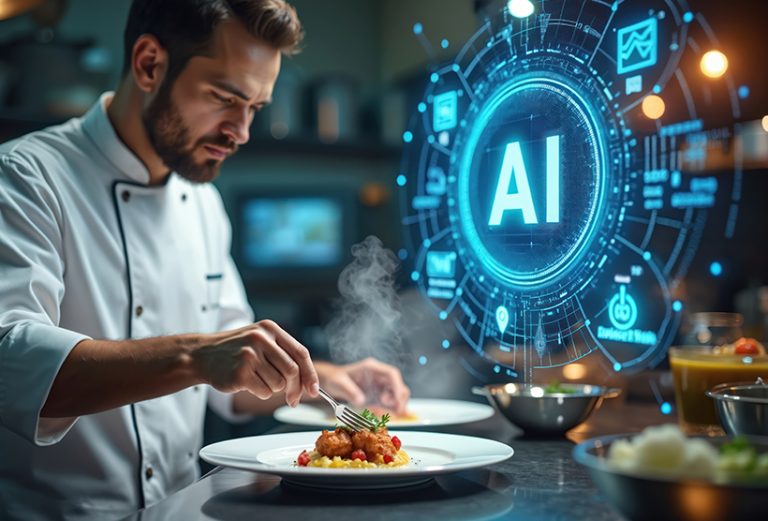

Menu development has always been part art, part science.
Operators balance customer preferences, food trends, profitability, seasonality and operational realities when deciding what makes it onto a menu. It is a process that relies on experience, instinct and, often, a fair amount of trial and error.
As AI tools become more sophisticated, that process may begin to change.
Not because AI will replace chefs or menu developers, but because it may help businesses identify patterns and opportunities much faster than before.
Across retail and foodservice, AI is already being used to analyse large volumes of data. It can identify emerging trends, highlight shifts in consumer behaviour and spot connections that might otherwise take months to notice.
For operators, that could create new opportunities when planning menus.
Imagine being able to see which flavour combinations are gaining traction, which ingredients are appearing more frequently across social media, or which dishes are generating the strongest customer engagement. Instead of relying solely on intuition, businesses may increasingly have access to data that helps support decision making.
This could be particularly useful when introducing seasonal specials or testing new concepts.
Rather than asking, “What do we think customers might like?”, operators may increasingly ask, “What are customers already responding to?”
That shift could help reduce risk while improving the chances of a successful launch.
AI may also support menu simplification. By analysing sales data, operators could gain clearer insight into which dishes consistently perform well and which contribute unnecessary complexity. This could help businesses make more confident decisions about menu changes and ingredient rationalisation.
Another potential benefit is identifying opportunities for ingredient crossover. Many operators are already looking for ingredients that work across multiple dishes and dayparts. AI could help reveal combinations and applications that maximise versatility while reducing waste.
However, there are limits to what data can tell us.
Food is emotional. People do not choose dishes purely because a trend report says they should. They choose them because they evoke memories, create comfort, satisfy cravings or simply look delicious.
A menu built entirely by data might be efficient, but it could also risk feeling predictable.
This is where human creativity remains essential.
The most successful menus of the future are unlikely to be designed by AI alone. Instead, AI may become another tool in the process, helping operators understand what is happening while leaving people to decide what should happen next.
In that sense, AI may not replace the creative side of menu development.
It may simply give it better information to work with.