
For a long time, the language of healthy eating was largely about restriction.
Low fat. Low calorie. Reduced sugar. Smaller portions.
Products and menus regularly told customers what had been removed, and choosing the “healthy option” often meant choosing something noticeably different from the rest of the menu.
Today, the picture is considerably more complicated.
Customers haven’t stopped caring about nutrition, but the idea of what makes food feel healthy has broadened. Protein, fibre, vegetables, plant-based ingredients, freshness and balance can all influence that perception.
At the same time, enjoyment hasn’t gone anywhere.
For foodservice operators, understanding that changing definition matters.
From taking away to adding more
One of the biggest changes in the health conversation is the shift towards what food contains rather than simply what it doesn’t.
The continuing interest in protein is an obvious example, but it’s part of something much wider.
Customers may look for more vegetables in a dish, choose foods containing wholegrains or pulses, or seek out ingredients they associate with freshness and nutrition.
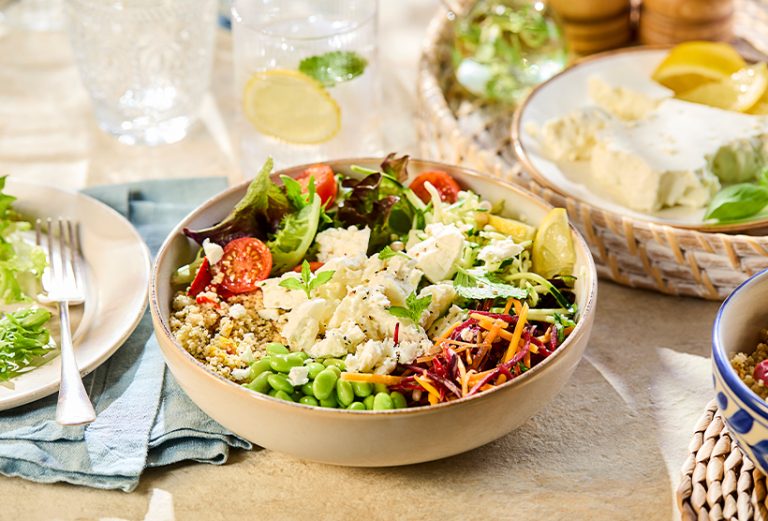
A colourful grain bowl packed with vegetables, feta and chickpeas can communicate something very different from the traditional image of a “diet” meal, despite still satisfying a customer’s desire to make a considered choice.
The emphasis has moved.
Healthy food doesn’t necessarily have to look restrictive anymore.
Balance can matter more than perfection
Eating habits rarely fit neatly into categories.
Someone might order a salad at lunchtime and dessert after dinner. Choose a plant-based dish one day and a cheeseburger the next. Add extra vegetables to one meal and treat themselves with another.
That isn’t necessarily contradictory.
Increasingly, customers appear comfortable with the idea that eating well happens across a wider pattern of choices rather than through every individual meal meeting an ideal.
For foodservice, that’s useful.
It means menus don’t necessarily need a separate collection of dishes labelled as the healthy choices. Different needs can be accommodated throughout the menu instead.
A dish can be fresh and indulgent.
Nutritious and comforting.
Vegetable-led and satisfying.
Those ideas no longer need to sit at opposite ends of the menu.
Familiar ingredients can have strong appeal
There’s also been growing attention around what’s actually in our food.
Customers have access to more nutritional information than ever and conversations around processing, additives and ingredient lists have become increasingly mainstream.
That doesn’t mean every customer is scrutinising every ingredient.
But simple, recognisable foods can carry powerful associations.
Vegetables, grains, beans, lentils, eggs, cheese, yoghurt, nuts, olive oil and other familiar ingredients make it relatively easy for customers to understand what they’re eating.
For operators, there’s an opportunity here to let ingredients speak for themselves.
Sometimes a menu description that simply sounds fresh, colourful and appetising can communicate more than a collection of health claims ever could.
Healthy still has to taste good
This is perhaps the part that hasn’t changed.
However nutritionally impressive a dish might be, customers still have to want it.
Foodservice is competing for occasions when people are choosing to eat away from home, and enjoyment remains fundamental to that decision.
That’s why flavour, texture and presentation still matter.
A vegetable-led dish shouldn’t feel like the consolation prize. A protein-rich lunch doesn’t need to resemble sports nutrition. A lighter option can still contain creamy, salty, crisp or indulgent elements that make it satisfying.
Health may influence the decision.
Taste determines whether somebody wants to order it again.
Different customers mean different definitions
There is also no single definition of healthy.
For one customer, it might mean increasing protein.
For another, eating more plants.
Someone else might prioritise fibre, fewer highly processed foods or simply having a more balanced lunch than they did yesterday.
Age, lifestyle, dietary requirements and personal goals can all influence those choices.
That makes broad labels increasingly difficult.
Rather than trying to define one perfect healthy dish, operators can offer enough variety for customers to make choices that work for them.
The Mediterranean influence
This may also help explain why Mediterranean-inspired food continues to have such lasting appeal.
Colourful vegetables, beans and pulses, olive oil, grains, cheeses, herbs and simple preparations naturally fit many of the qualities customers now associate with eating well.
Yet the food doesn’t generally present itself as “diet food”.
It’s about flavour first.
That balance between enjoyment and ingredients customers recognise may be increasingly important as attitudes towards health continue to evolve.
A healthier relationship with “healthy”?
Perhaps the biggest change is that healthy eating is becoming harder to reduce to one word on a menu.
Customers are better informed, but they’re also navigating an enormous amount of conflicting information.
Protein is good. Plants are good. Fat was bad, then some fats were good. Carbohydrates have moved in and out of favour. New wellness trends appear constantly.
Foodservice doesn’t need to solve that debate.
What operators can do is provide choice, use good ingredients, communicate clearly and create dishes that customers genuinely enjoy eating.
Because for many people, “healthy” no longer means choosing the thing they really want and finding an alternative.
It means finding food that delivers enjoyment, nourishment and balance at the same time.
And that gives operators a far more interesting menu to work with.